As a cost-saving alternative to dry grain supplementation, bagged snaplage/earlage offers high energy content and easy digestibility.
Dietary supplementation with dry grains has traditionally been utilized as an economical way to meet the high energy demands of the herd, particularly when forage is scarce or of low quality. However, ranchers and cattle feedlot operators are increasingly turning to high moisture corn silage, specifically snaplage/earlage, due to its high energy content and easy digestibility. In many ways, these high-energy “concentrates” can almost match the nutritional energy of dry grain pound for pound.
For beef cattle, particularly those in the finishing phase, high energy is needed for rapid weight gain and marbling of the meat. In finishing diets for beef cattle, dry grains often make up a significant portion of the ration, sometimes up to 70-80%, depending on the growth phase and desired market weight. The dry grains have supported efficient weight gain and overall animal health in coordination with a careful dietary balance.
The practice of harvesting the entire corn plant, chopping it up while still green, and fermenting it creates high-moisture silage that serves as superior feed due to its excellent energy density. Dry grains are often mixed with silage, hay, and other feed ingredients in a Total Mixed Ration (TMR) to ensure a balanced intake of energy, protein, and fiber to support optimal weight gain and overall animal health.
Now, a growing number of cattle operations are utilizing snaplage/garage as an alternative to dry grain supplementation. Snaplage/garage involves the entire ear, including cob, kernels, husk, and part of the shank, being harvested and ensiled at 32-40% moisture.
One of the main obstacles of producing such high moisture silage using traditional methods like piles, pits, and bunkers is the considerable risk of spoilage and loss, which can amount to as much as 30%. This combined loss is often referred to as “shrink.” The problem with these conventional silage storage methods is the excessive exposure to oxygen, which leads to rapid silage deterioration. The standard practice is leaving the pile’s open face, pit or bunker open for feeding. This leaves hundreds of square feet exposed and deteriorating before it can be fed.
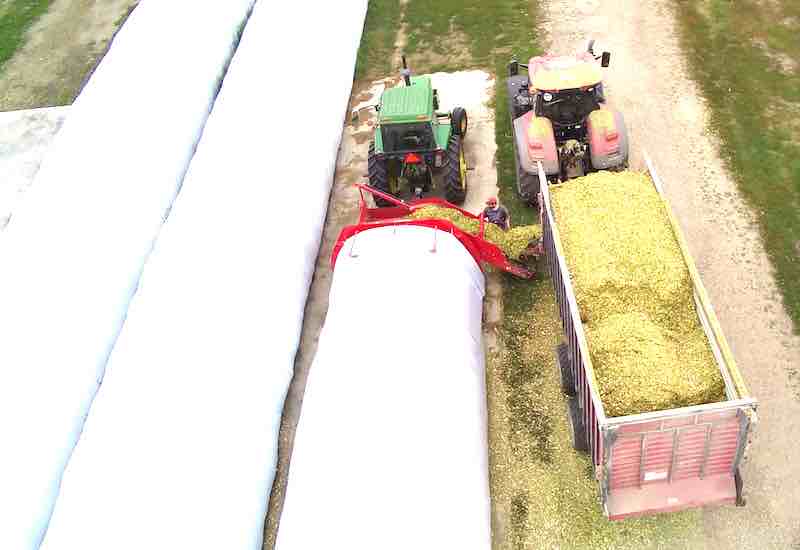
This storage challenge is leading ranchers and feedlots to store snaplage/earlage in silage bags instead of conventional methods. Bagging provides ideal conditions that minimize spoilage. With silage bagging, the oxygen is removed almost instantly, and fermentation begins promptly. The sealed bags protect silage quality and maintain favorable fermentation conditions even amid unfavorable circumstances such as exposure to rain, moisture, excessive dryness, or prolonged storage.
“My experience is that high moisture corn generally does better in a bag than in a bunker or a drive over pile,” says Dr. Keith A. Bryan, Technical Service Manager Silage and Dairy, North America, for global biosolutions company Novonesis.
Proper silage packing ensures the removal of oxygen and protection of the bag for snaplage/earlage. This results in higher nutrient retention per acre, increased beef production, enhanced herd health, and reduced veterinary costs.
The proper bagging of snaplage/earlage can also help to streamline operations. High moisture snaplage/earlage can be part of the normal corn harvest. Simply cut a smaller portion of your corn crop using a snapper head on the harvester. Bag that portion in separate, smaller bags and then mix with the larger, whole-plant corn silage instead of dry grain when mixing your ration. This saves significant time and money since it eliminates the need to purchase dry grain from outside sources.
A farmer by trade, Ryan Williams of R & M Cattle Company in Farwell, Texas, operates his feed yard, a small dairy, and custom harvests forage crops for similar nearby operations. Williams has bagged silage and forage since 2006 and says the technique works particularly well for lower-tonnage crops like high-moisture corn.
“The shrink is very low, about 1 to 2%, and the quality of feed is the best when bagged because it’s protected. There’s no mold, there’s no crust on top, none of that,” says Williams. “You can keep the bag for quite a while until you need to use it. You can use some of it and stop. We’ve had silage [remain in bags] for three years before it was used,” adds Williams.
Bags provide another advantage. High-moisture corn silage, like snaplage/earlage stored in silage bunkers, bags, or pits, can be susceptible to pest infestations if not properly managed. The warm, moist environment is ideal for rodents to nest in and for birds to scavenge food. The fermentation process that high-moisture corn silage undergoes enhances its smell and taste, making it even more attractive to pests.
However, the effective use of silage bagging allows for a smaller feed-out face and less exposure to the environment, including pests.
“With the large bags the feedout face is so much smaller and you go through a bag so much quicker than a huge drive over pile or bunker,” says Dr. Bryan. “If packed correctly and by feeding it out more quickly, oxygen penetration is reduced, and you can have more hygienic feed in terms of reducing yeast and molds…compared to a bunker or a pile.”
“The amount of high moisture corn exposed to rodents and birds is also quite a bit less in a bag than it is in any other storage form relative to the total amount stored,” adds Dr. Bryan.
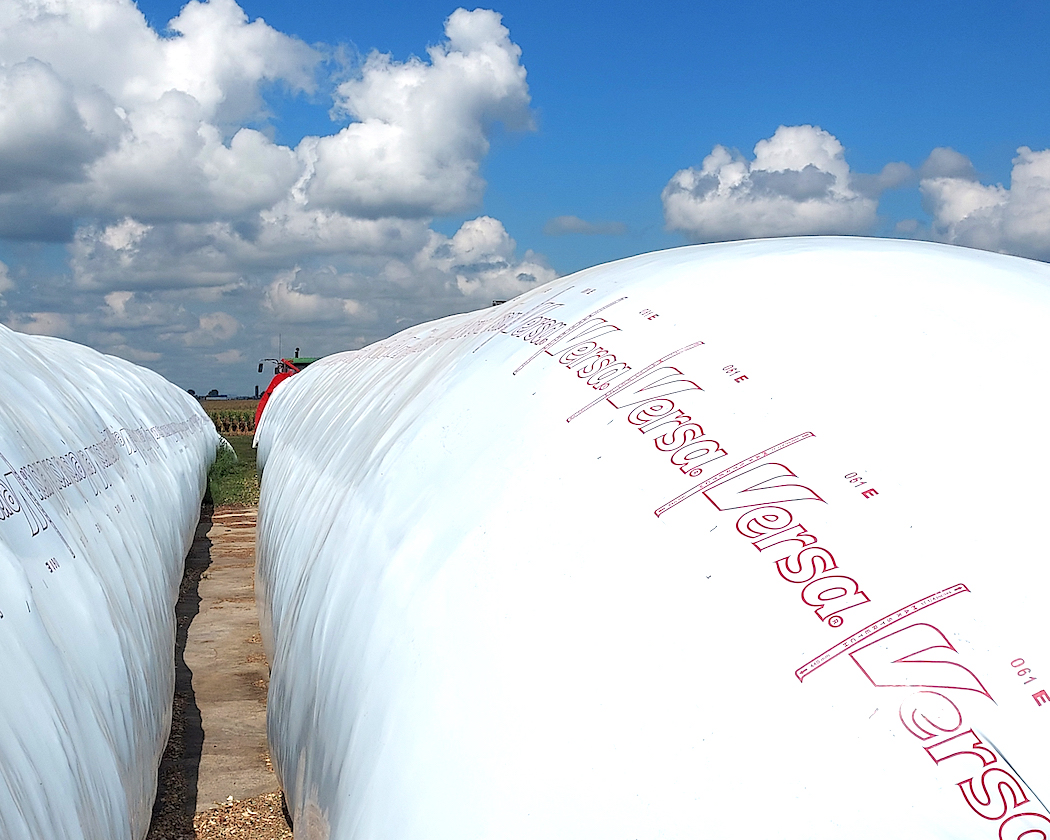
Proper bagging enhances nutrient retention and overall cattle health while cutting costs.

This feed meets the substantial energy demands of cattle.
Optimal Bag Packing Density
Cattle operations should prioritize packing pressure as a key factor in equipment selection to maximize the effectiveness of their equipment. Proper silage packing and bagging remove oxygen almost instantly, and fermentation begins promptly. The sealed bags protect silage quality and maintain favorable fermentation conditions.
Packing is approached in various ways among silage bagging equipment, which can affect productivity. One bagging system utilizes a cable system with a heavy net backstop. With such a system, after each bag is filled, the cables must be rewound, and the backstop moved to the next location, a cumbersome process.
For greater efficiency, Astoria, OR-based Versa Corporation, a global leader in agricultural silage bagging and handling, created an innovative cable loop density system that uses a single adjustable cable inside the bag. The OEM also developed a heavy-duty belt system that facilitates tighter packing of longer silage bags than the industry norm, which minimizes air pockets and spoilage while maximizing storage capacity.
“The goal is to firmly pack the bag without over-stretching the bag while gradually moving the machine forward as the bag fills,” says Steve Cullen, President of Versa.
Today, the process of creating bagged silage for dairy farmers is relatively simple. Essentially, they back up a truck, dump the feed in, and start bagging. Capacities generally range from 2-5 tons per minute for side unloading wagons to higher capacity truck rear-end loading models that handle from 4-16 tons of bagged silage per minute.
The largest model the OEM offers can switch between 12 and 14 bags as part of the machine design and can be easily transported to different sites due to a narrow 12’ width. About 15 years ago, Williams says R & M Cattle Company switched to a Versa bagger in part because it was easier to maneuver and maintain. He also appreciated that the equipment is “farmer friendly” without complicated controls and hydraulics.
“Our bagger is easy to maintain; there are few specialty parts on the machine,” says Williams.
Visit versacorporation.com for more information.
![Get More from Your Tillage Investment [PRODUCT SPOTLIGHT]](https://farmandlivestockdirectory.com/wp-content/uploads/Brandt-WEB-440x264.jpg)