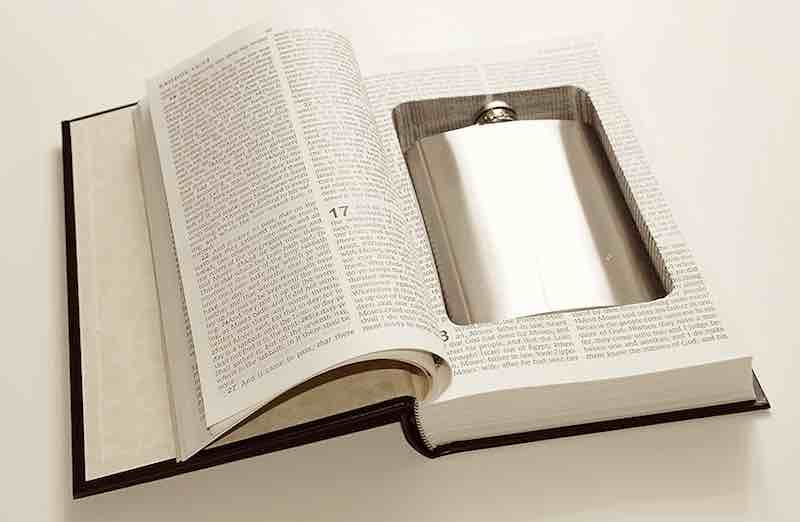
Between smartphone addictions and AI that will write your school papers for you, I fear that there’s a generation coming in which no one reads. Growing up before the internet, we were told that books taught you new facts, grew your imagination, and allowed you to travel to different places while staying in your own living room. To call someone “well-read” was to suggest that they were intelligent, and it was a sought-after distinction.
To further make the case for books, it’s worth illustrating that everyone has something to gain from reading them.
Case and point: Port Tampa, Florida, 1922.
On January 17, 1920, the eighteenth amendment went into effect, making it illegal to produce or sell alcohol in the United States. Championed by pious protestant denominations, the momentum to prevents the “ills” of society brought about by alcohol had been building for a long time, from the temperance movement in the 1820s to the Prohibition Party founded in 1869.
During World War I the US government passed a temporary ban on beer and whisky production in order to save grain to feed soldiers and their horses. Not long after, congress passed a bill, overrode Woodrow Wilson’s veto, and made the entire country “dry.”
Right before the law went into practice, most wealthy families stockpiled and hid copious bottles of booze. The working class, however, could not afford that option. Instead, if they were to get their hands on alcohol once prohibition had begun, they had to rely on a bootlegger.
Illegal bars called speakeasies sprang up in cities, first supplied with rum from the Caribbean and then later higher-profit spirits such as gin or champaign. Most illicit alcohol, however, was produced by those operating an illegal still hidden in the woods.
These moonshiners (called so because they had to do their trade by the light of the moon) supplied the bootleggers who distributed the alcohol, as well as those in the local community. Those making moonshine were often farmers, since they had land and corn at their disposal. Sometimes it was under their own proprietorship, and other times they were muscled into it by bootleggers.
Once prohibition went into effect, 1520 federal agents were tasked with enforcing the law. Their job, in part, was to root out the operations that were distilling illegal spirits. It became a high stakes game of cat and mouse between the officers and those who made and sold moonshine. Moonshiners had to be clever to stay ahead of the authorities and remain undetected. Hence, returning to the importance of reading.
According to an article published on May 27th, 1922 in The Evening Independent out of St. Petersburg, Florida, there were rumors that one moonshiner had apparently read The Adventure of the Priory School, a Sherlock Homes story written by Sir Arthur Conan Doyle. This is suggested because, according to the report, state enforcement officer A.L. Allen had uncovered a “cow shoe” at the Port Tampa residence of a known moonshiner.
Moonshiners would have to return to their stills often, and the heavy foot traffic would leave behind evidence that could betray the location of their setup. To get around that, moonshiners, as well as bootleggers coming to pick up the alcohol, carved wooden blocks to resemble the shape of a cow’s hoof and strapped them to their shoes. Officers were less likely to pay attention to hoofprints crossing a field or a ridgeline than bootprints. It is believed that the first person to wear cow shoes got the idea from the Sherlock Holmes book, in which the villain shods his horse with similar cow shoes to avoid detection.
If learning how to get away with selling contraband doesn’t make reading cool for kids, I don’t know what will.
Prohibition lasted thirteen years in total. The high profits of the illegal alcohol trade enticed organized crime, making famous the likes of Al Capone and George Remus, but often led to violent turf wars between gangs. America soon tired of the blood on the streets and longed instead for the time of the occasional drunkard.
Additionally, when the Great Depression hit, the federal government needed the additional revenue stream that could come from taxing beer. Under Franklin D. Roosevelt, the Twenty-first Amendment repealed the Eighteenth Amendment on December 5th, 1933, allowing it to be legal to produce and sell alcohol again.
Anemoia is the term given to nostalgia for a time one has never lived in. Setting aside the violent bloodshed by urban gangsters, the illegal alcohol that sometimes made people blind or killed them outright, and the high-level corruption that ran through both the government and law enforcement, there’s something appealing about an era when even criminals sought to be well-read.
Here’s to the power of the books.